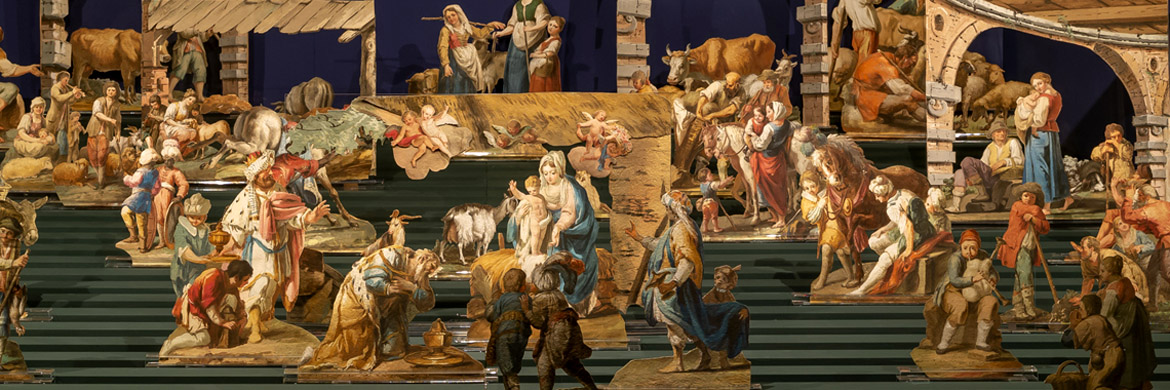
A masterpiece of Renaissance sculpture from the Southern Netherlands, the Retable of the Magi from the Basilica dei Santi Apostoli e Nazaro Maggiore in Milan is a majestic altarpiece from the late 15th or early 16th century.
It is presented here for the first time after restoration (2022-2023).
Made of oak wood, it consists of a case housing refined sculptures in the round and finely painted and gilded high reliefs, carved in Brussels in the workshop of Flemish sculptor Jan II Borman (ca. 1460 – ca. 1520). The work originally included two volets, now lost, i.e. large shutters painted on both sides to complement the sculpted central part, which were kept closed or open depending on the time of the liturgical calendar.
The uniqueness of the retable of San Nazaro lies in the fact that it is the only known example from that famous workshop to have retained its original polychromy and decorations, and one of the very few Flemish altarpieces to be found in Italy – and, on top of that, in its original location.
The retable was intended for the altar dedicated to the Magi that Protasio Bonsignori commissioned before 1510 for the oratory of Saint Catherine, adjacent to the basilica of San Nazaro. In the mid-16th century, the oratory – which retains stained glass windows also commissioned by the Milanese merchant in Nuremberg – was connected to the left arm of the church transept, where the retable was set into the wall in the second half of the 20th century.
The work comprises a single large scene dedicated to the Epiphany, set within a refined frame reminiscent of the nave of a Gothic church. The Magi adoring the Child occupy the foreground on both sides of the Holy Family. Unusually, there are nine of them, distinguished by different poses, clothes and attributes, representing the procession coming from the East. They are sculpted almost in the round and in profile, in three-quarter view or from behind, and stand out for the elegance of their details and the naturalism of their features.